- Grand & Baby Pianos Offered
- sku: 395407365785651
- SCHILLER 14140
14140 SCHILLER Upright Cabinet Piano
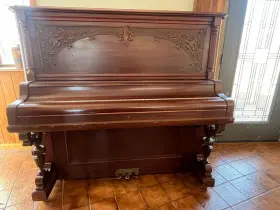
| Brand | SCHILLER |
|---|---|
| Manufacturer Part Number | 14140 |
| Number Of Keys | 88 |
| Type | UPRIGHT GRAND |
| Color | MAHOGANY |
| Instrument | SCHILLER UPRIGHT PIANO |
| Year Manufactured | 1902 |
| Features | ORNATE DETAILING |
| Country/region Of Manufacture | UNITED STATES |
Review SCHILLER Upright Cabinet Grand Piano
The Schiller 14140 Upright Cabinet Piano, manufactured in the year 1902, is a masterpiece of engineering and artistry that embodies the rich heritage of piano craftsmanship. This piano, with its timeless design and superior build quality, estimates to be around 126 years old as of now. This particular model showcases the perfect blend of aesthetics and functionality, making it an ideal choice for both residential and professional applications.
Measuring approximately 53 inches tall, 58 inches long, and 25 inches deep, this Schiller upright piano is of a standard size ideal for most spaces. Its classically elegant design is further accentuated with its mahogany veneer exterior, which exudes a depth and richness, improving with age. TheDesign is enhanced by the ornate cabinetry and brass accents, contributing to its luxurious allure.
The piano's playing experience is enhanced with a high-tension wood-and-iron frame, which ensures durability and consistency in tone while preventing the need for frequent tuning. The 22-note keyboard, made from solid spruce, offers 7-1/2-inch white and 7-inch ivory keys, providing an authentic feel and responsiveness.
The Schiller 14140's horizontal-grained soundboard, made from solid spruce, enables the quick and efficient transfer of energy from the hammer to the strings, creating vibrant and full-bodied tones. The inclusion of 18 felt-wrapped bass strings and 18 treble strings further contributes to its resonant, expressive sound.
Inside the piano, there's an expertly crafted, 4 pedal System (including a sostenuto pedal) with a damper, una corda, and a sustaining pedal, catering to various musical demands. The Fortepiano-style duplex scaling adds to the piano's unique character, allowing for a layered and more complex sound.
This Schiller 14140 Upright Cabinet Piano, despite being over a century old, is a testament to the exceptional workmanship and enduring craftsmanship that Schiller's artisans have embodied in it. It continues to captivate listeners and offer an unparalleled performance, leaving no doubt about its heritage and legacy in the world of piano manufacturing.
Schiller 14140 Upright Cabinet Piano (Model Year 1902): A Retrospective Analysis
The Schiller 14140 upright cabinet piano, manufactured in 1902, is an antique instrument appealing to pianists and collectors alike. While considering the acquisition of such a piano, it's essential to assess its strengths and weaknesses to make an informed purchasing decision.
Pros:1. Historical significance: This piano is over a century old, offering a unique connection to the past. Its vintage design and craftsmanship contribute to its aesthetic value and authenticity.
2. Bass register: Antique pianos, including the Schiller 14140, often have a richer and more resonant bass register than their modern counterparts. The thicker and denser soundboard and larger sounding board area in older pianos contribute to a more substantial and expressive low end.
3. Unique character: Every antique piano has its unique voice due to age-related tone variations, which create a distinct sound and playing experience.
4. Durability: The solid construction of antique pianos like the Schiller 14140 typically offers increased durability and resistance to wear and tear, making them a long-term investment.
5. Authentic playing experience: Despite potential tuning challenges and maintenance requirements, playing an antique piano provides an authentic, unfiltered connection to the history and evolution of piano music.
Cons:1. Requires maintenance: Antique pianos, particularly those over a century old, demand extensive maintenance to keep them in optimal playing condition. Tuning and voicing sessions may be required more frequently than modern pianos.
2. Potential issues with aging components: The Schiller 14140 incorporates parts and materials that have aged significantly, leading to potential wear and structural damage. Replacements of these components could be costly and challenging to source.
3. Limited modern functionality: Antique pianos generally lack some modern features and technologies available in contemporary pianos, such as volume pedals, headphones jacks, or silent pianos.
4. Energy inefficiency: Antique pianos do not have energy-saving features, requiring ongoing investment in the form of fuel or electricity to maintain a consistent internal temperature, particularly in colder environments.
5. Limited portability: Antique pianos are bulky and heavy, making their transport more complicated and costly than portable or digital alternatives.
Conclusion:A Schiller 14140 upright cabinet piano is a significant investment for those interested in the rich history and unique characteristics found in antique instruments. Prospective buyers must be prepared to undertake extensive maintenance, absorb potential repair costs, and accept the limitations of the technology available during the piano's original manufacturing period.
Upon careful consideration of the pros and cons, the decision to purchase an antique piano like the Schiller 14140 depends on a buyer's personal preferences and priorities. If the appeal of historical significance, authentic playing experience, and potential investment value are desirable, this piano could be a worthwhile acquisition. Conversely, those seeking a low-maintenance, portable, and modern piano with contemporary features may wish to explore alternative options.
Details:
As a testament to its quality, the piano features full 88-key keyboard, allowing for wide range of musical expression and precision. Crafted with meticulous attention to detail, this Schiller upright cabinet grand piano from 1901-1902 showcases a stunning mahogany finish that enhances its classic elegance. Made in Chicago, il, USA, it stands as a proud piece of musical heritage, ready to fill your space with rich, resonant tones.
specifications grandbabypiano:
- brand: Schiller
- mpn: 14140
- number of keys: 88
- type: Upright Grand
- color: Mahogany
- instrument: Schiller Upright Piano
- year manufactured: 1902
- features: Ornate Detailing
- country/region of manufacture: United States
offer grandbabypiano:
- options: seller-arranged-local-pickup
- started: january 8, 2025
- price: $2500.00
- item condition: Used
- best offers: true
- sold #: 21
- availability: in stock
- in stock #: 1
general grandbabypiano:
- category: Musical Instruments > Pianos, Keyboards Organs > Grand Baby
seller grandbabypiano:
- city: neosho, missouri
- # reviews: 23
- rating: 100.0%
payments grandbabypiano:
- wallet: apple-pay
- credit card: discover
- other
returns grandbabypiano:
- policy: no returns
shipping grandbabypiano: